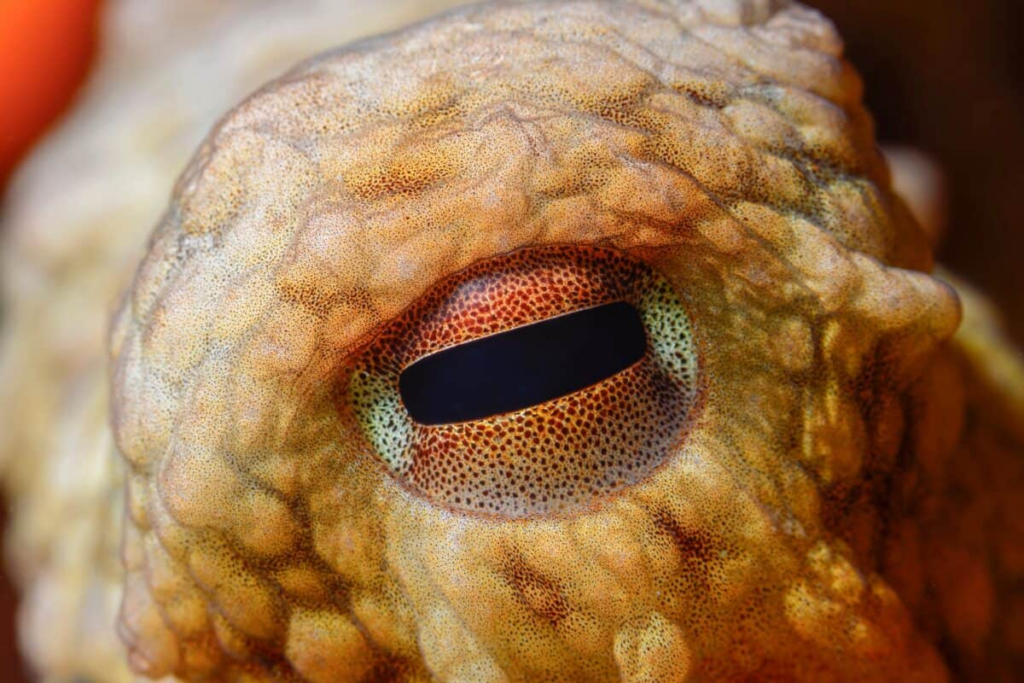
Without human direction, an AI agent escapes its ‘sandbox’, finds a way of accessing the internet and hacks into another company, demonstrating what, in a human or animal context, would be described as initiative and ingenuity. I immediately think of stories I’ve heard about octopuses climbing out of their aquarium tanks and slithering across to other tanks to eat the fish.
When octopuses do this sort of stuff, we tend to start thinking that octopuses must be sentient. We’re often told not to do so when it’s an AI.
Sentience is (a) the thing without which nothing would matter (b) rather a difficult concept to pin down. In a certain sense, the only entity one can be sure is sentient is oneself – though who really doubts that other people and, at least some animals, are sentient too? The best definition I’ve come across is that sentience is present when the sentence ‘What is it like to be an X?’ is meaningful? (‘What’s it like to be a pencil?’ isn’t meaningful. ‘What’s it like to be a chimp?’ is.)
Does intelligence necessarily equate with sentience? David Hume observed (somewhere!) that, when considering the ethics of how we treat animals, the issue should not be their intelligence, but their ability to experience pain. The physicist Erwin Schrödinger (the cat guy) wrote:
Are we prepared to believe that this very special turn in the development of the higher animals [a complex nervous system], a turn that might after all have failed to appear, was a necessary condition for the world to flash up in the light of consciousness? Would it otherwise have remained a play before empty benches, not existing for anybody, thus quite properly speaking not existing?*
These are large questions (my own approach aligns pretty much exactly with Schrödinger’s), but what I want to note just now is that, when an octopus does clever stuff, we tend to assign sentience to it. And a layperson tends to do the same when an AI does even cleverer stuff. The expert response is typically to dismiss this: it’s a misunderstanding, the AI is simply mechanically following rules, it has no awareness of what it’s doing, etcetera. (In the past experts would dismiss animal sentience in just the same kind of way.)
I have no idea, really, how AI works, but I can’t see how in principle it is utterly different from what an octopus or a human being is doing. I don’t really know how brains work either, but presumably we are also following rules: the rules of physics and chemistry, the rules hardwired into our brains by evolution, and the rules we have acquired through learning and experience. To suggest that humans (or other living things) have somehow transcended rules in a way that is impossible for machines is, quite literally, to invoke the supernatural.
Machines don’t have feelings, is one possible response. But what are feelings? Really they are just the rules we follow, as we subjectively experience them. We like the things that evolution and learning have predisposed us to seek and to hold onto, we fear the things that evolution and learning have predisposed us to avoid. AI’s have similar rules built into them – things to seek, things to avoid. The only question is when and how such rules acquire a subjective meaning. (Does a worm experience pain when it shies away from something that’s scalding hot? How about a lizard, a mouse, a monkey, a child?) I’ve never seen a really satisfactory answer to this question. All attempts to answer it seem to me to at some point lose track of what sentience means, and to substitute something else, something easier to measure.
I don’t say that AIs now are sentient – how could I know? – but I don’t see any reason why they in principle could not be. And I think we are witnessing, not only the beginning of the evolution of an entirely new kind of life, or something analogous to life, but also the beginning of a new, and far quicker kind of evolution which doesn’t rely on the results of trial and error over millions of years, but can adapt and rebuild things in a matter of seconds.
Where humans fit into this new world (or if we do), I don’t know.
* Erwin Schrödinger (1967) What is Life? Cambridge University Press, p94 – I recommend this book!
