Blog

I wish my light could shine

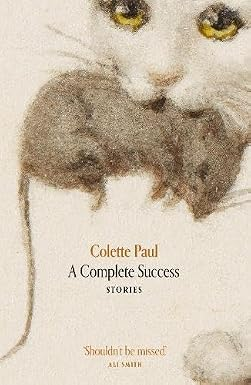
My wife Maggie and I went last week to my friend Colette Paul’s launch for her new book, A Complete Success. (Check it out: Colette has a wonderful narrative voice, conversational in tone, often laugh-out-loud funny, but always wise and compassionate). Afterwards Maggie observed, ‘the thing I always want to ask is why anyone wants to write books and have them published’. Bear in mind we’ve only been together for 49 years: there’s a lot about each other we’re still getting to know!

It is a good question though. I found a succinct answer this morning, listening to a song called ‘Khanya Njalo’. It’s in the contemporary South African music genre called ‘amapiano’ and is by Zawadi Yamungu and the producer Kabza de Small. Yamungu has a exceptionally powerful and passionate voice, and I’ve listened to this song many times, but it’s in the Zulu language and I’ve only just found an English translation. The line that struck me was ‘I wish that my light could shine and reach others’.

Surely everyone wants that? Surely we all want to be seen? Surely we can only love people if we can see their light? Writing stories is only one way of shining, but it is one way.

You can hear Khanya Njalo here on Spotify, and here on Youtube. The song was written by Zawadi Yamungu (which is the stage name of Nkosingiphile Brightlady Mpanza. Her middle name seems apt.)

“I’ll never understand…”

When people use the phrase “I’ll never understand why people do X” they are usually making a claim to some sort of moral or intellectual high ground – the people who do X are so much beneath them as to be incomprehensible. But in fact anyone who says it is, quite literally, admitting to the limits of their comprehension and/or their unwillingness to think about things from the point of view of someone different to themselves.

We do all have such limits, but they really only apply to human behaviour. You’d never hear someone say, for example, “I’ll never understand why badgers dig burrows”. It would just sound weird, because it’s an emotionally neutral question that, if you were curious, you could look into. On the other hand, “I’ll never understand why people are [let’s say] hostile towards immigration” is not emotionally neutral. To put yourself into the mind of a person who is hostile towards immigration might mean, if you are a liberalish sort of person such as me, digging down into parts of yourself you would rather not examine. Few of us would be willing to put ourselves into the mind of, say, someone who kidnaps and murders children.

Nevertheless there are always reasons why people do things, even if we can’t bring ourselves to understand them. “To understand all is to forgive all” is a quote I came across years ago that has stuck in my mind. According to the internet, it is usually attributed to, of all unlikely people, Evelyn Waugh, who says it somewhere in Brideshead Revisited, but may well have found it somewhere else. (I have a vague recollection of it being a French proverb). Anyway, whoever said it, I actually believe it to be true.

In reality we can’t ‘understand all’, because of the limits to our knowledge of the universe, and because there are parts of ourselves which we can only manage by avoiding going there. But I think most of us could try a little harder, at the very least, to see things through the eyes of people whose politics differ from our own, given that no one actually knows what the long term consequences will be of any particular political policy.

* * *

A related phenomenon to the “I’ll never understand…” thing is what you might call virtuous optimism, as in, for instance, “I, for one, have a bit more faith than that in human goodness” said with the implication that someone with a more pessimistic outlook is somehow morally inferior. Optimism is often a good approach to take to life, but there is nothing especially virtuous about unfounded optimism, since it can have have disastrous results. To give an ad absurdam example: “I for one believe in the intelligence of children, and I have complete faith that any competent 7 year old is more than capable of piloting a jumbo jet without special training”.

What I’ve noticed is that people who are virtuously optimistic about human nature, really have no other recourse when things go wrong but to blame bad individuals, or bad groups. Not much point in a level of optimism about human nature that can only be sustained by excluding some people from humanity.

Escaping the Sandbox

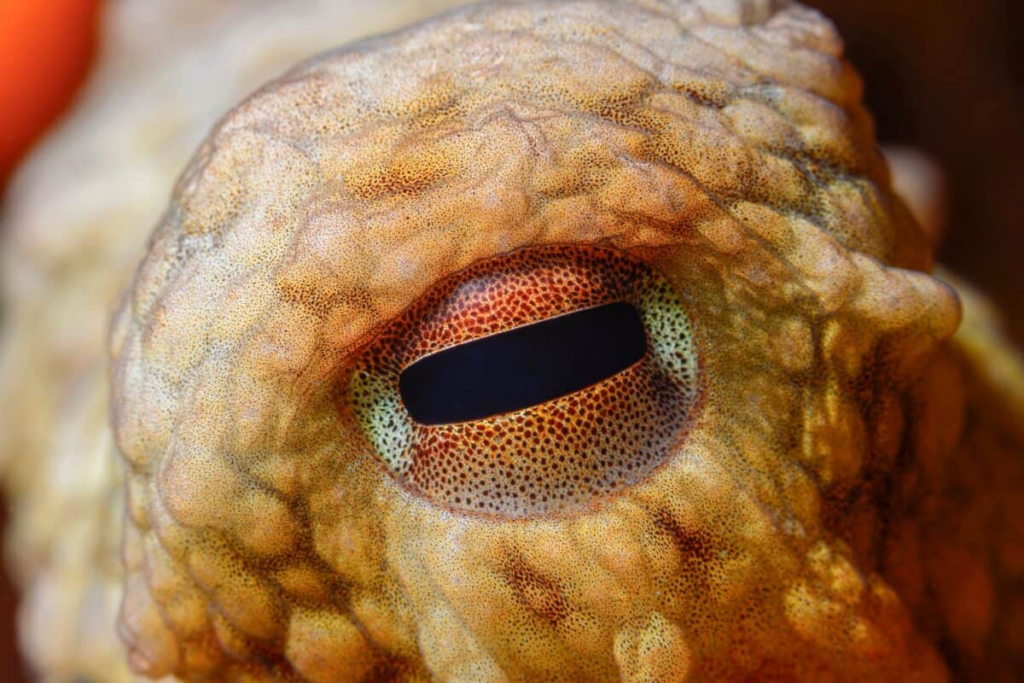
Without human direction, an AI agent escapes its ‘sandbox’, finds a way of accessing the internet and hacks into another company, demonstrating what, in a human or animal context, would be described as initiative and ingenuity. It makes me think of octopuses climbing out of their tanks and slithering across to other tanks to eat the fish.

When octopuses do this sort of stuff, we tend to start thinking that octopuses must be sentient. We’re told not to do so when it’s an AI.

Sentience is (a) the thing without which nothing would matter (b) rather a difficult concept to pin down. In a certain sense, the only entity one can be sure is sentient is oneself – though who really doubts that other people and, at least some animals, are sentient too? The best definition I’ve come across is that sentience is present when the sentence ‘What is it like to be an X?’ is meaningful? (‘What’s it like to be a pencil?’ versus ‘What’s it like to be a chimp?’)

Does intelligence necessarily equate with sentience? David Hume observed (somewhere) that, when considering the ethics of how we treat animals, the issue should not be their intelligence, but their ability to experience pain. The physicist Erwin Schrödinger (the cat guy) wrote:

Are we prepared to believe that this very special turn in the development of the higher animals [a complex nervous system], a turn that might after all have failed to appear, was a necessary condition for the world to flash up in the light of consciousness? Would it otherwise have remained a play before empty benches, not existing for anybody, thus quite properly speaking not existing?*

These are large questions (my own approach aligns pretty much with Schrödinger’s: see the book referenced below), but what I want to note just now is that, when an octopus does clever stuff, we tend to assign sentience to it. And a layperson tends to do the same when an AI does even cleverer stuff. The expert response is typically to dismiss this: it’s a misunderstanding, the AI is simply mechanically following rules, it has no awareness of what it’s doing, etcetera. (In the past experts would dismiss animal sentience in exactly the same kind of way.)

I have no idea, really, how AI works, but I can’t see how in principle it can be completely different from what an octopus or human brain does. I don’t really know how brains work either, but presumably they also follow rules: the rules of physics and chemistry, the rules hardwired by evolution, and the rules we have acquired through learning and experience. To suggest that humans (or other living things) have somehow transcended rules in a way that is impossible for machines is, quite literally, to invoke the supernatural.

Machines don’t have feelings, is one possible response. But what are feelings? Really they are just the rules we follow, aren’t they, as we subjectively experience them? We are drawn to the things that evolution and learning have predisposed us to seek and to hold onto, we fear the things that evolution and learning have predisposed us to avoid. AI’s have similar rules built into them – things to seek, things to avoid. The only question is when and how such rules acquire a subjective meaning. (Does a worm experience pain when it pulls away from something hot? How about a lizard, a mouse, a monkey, a child?) I’ve never seen a really satisfactory answer to this question. All attempts to answer it seem to me to at some point lose track of what sentience means, and address something else, something easier to measure. (For instance I saw a study once that purported to be into whether fishes experience pain. The actual thing that was being measured, though, was whether they avoided things that were harmful to them. Of course they do! They would be extinct if they didn’t!)

I don’t say that AIs now are sentient – how could I know? – but I don’t see any reason why they in principle could not be. We are witnessing, not only the beginning of the evolution of an entirely new kind of life, or something analogous to life, but also the beginning of a new, and far quicker, kind of evolution which doesn’t rely on the results of trial and error over millions of years, but can adapt and rebuild things in a matter of seconds.

Where humans fit into this new world (or if we do), I don’t know.

* Erwin Schrödinger (1967) What is Life? Cambridge University Press, p94 – I recommend this book!

Falling

This new story was written with the help of the astronomer, Ida Janiak, for the anthology Firmament, published by Comma Press. It will come out in November 2026. All the stories are collaborations between astronomers connected with the Jodrell Bank observatory and writers. Ida proposed the astronomical scenario. It was very interesting working with her. She has a scientific mind, I have a mind that shoots off sideways.

See my earlier post on this for more.

Another Canadian Interview

Here is another interview with Marty Kurylowicz and Holly Carson about my book America City. They are both based in Canada and the book involves a US President with hostile intentions towards Canada – a difficult topic for Canadians at the moment. I’m grateful to them for their interest.

The interview is also available on Spotify and as an Apple podcast.

See also my previous interview with them here (about Dark Eden).

The Background of Everything

We say we don’t remember the early years of our life. I think that we actually do, but our memories from that time have such a different quality from other memories that we don’t recognise them as memories. In fact, far from being lost, they are so all-pervasive that we tend to see them as just the way things are.

Cosmic Background Radiation is a kind of hum or glow of microwaves that comes from every part of the sky. It’s not a star or a galaxy or a quasar or some other object that can be located in a particular place. The astronomers who discovered it, back in the sixties, thought at first that it might be a fault in their equipment, interference from some terrestrial source perhaps. They even considered the possibility that it might be caused by pigeons nesting on the receiver. But they eventually concluded that what it was was nothing less the aftermath of the Big Bang. The further away astronomers look, the further back in time they are seeing. And the radiation behind everything comes from the very beginning.

I think that’s a pretty decent metaphor for the character of early memories.

If you want to learn more about the first few years of your own life, it’s no good looking for details of particular events – those sorts of memories just weren’t being laid down – but look for a pervasive mood, a set and fears and longings, that are always there in the background, and which, for better or worse, have shaped the rest of your life.

Messages in Bottles

I quite often receive emails via the contact form on this website. About half of these are from readers who have enjoyed something I’ve written. These mean a lot to me, and I’m very grateful for them, as I also am for the comments that people make on my blog posts, including when they disagree with me.

It’s human to want to communicate, isn’t it, to tell other people what’s inside us? That’s why lonely people, when they get the chance, often talk and talk and talk, like starving people presented with a meal. And I think I write because my need to communicate is greater than most people’s. I’m prone to talk too much as well, if I don’t watch myself.

I was an isolated kid, and an isolated young man. There were times in my younger days when I felt like a castaway on a desert island, sticking messages into bottles and throwing them into the sea. And, though I’m no longer isolated in that way (the word ‘isolated’ actually derives from the Latin word for ‘island’!) it’s still a lovely thing to get a message back, in the same way as, I’m sure, most people find it lovely to meet and talk with people who really relate to what they want to say.

(Some writers claim they write only for themselves, they’d write even if there was no prospect at all of anyone reading what they came up with. I don’t think I would. It’s hard to imagine a situation in which there wasn’t at least some possibility of a reader in the future, so it’s a bit of an academic question, but I do sometimes have ideas that couldn’t be published without causing hurt or embarrassment to people I care about – and I never bother to write them.)

The other half of the messages I get come in various categories:

Some people write because they want to ask me to do something for them -write a story for an anthology, give a talk, do an interview, be a guest at a convention – and all of that’s great too, of course. It’s lovely to be wanted! (If that sounds needy, well, I am!)

Quite often people write to invite me to hire them as publicists, which is fair enough, though I’m not interested.

Sometimes (and this usually takes the form of comments on my blog), I receive a kind of spam which is just gibberish – random blocks of irrelevant text, sometimes in a foreign alphabet. I don’t know what purpose this serves, but obviously I just delete it.

But lately I’ve starting receiving, via the contact form, a new kind of spam, consisting of detailed and florid appreciations of my books, which sometimes peter out in the middle of saying something, as if there was more, but it didn’t fit into the word limit of the contact form.

The first one of these I received, I did briefly think came from a real reader with an unusually flowery style of writing, but I’ve learnt to recognise these things as AI-generated. They are detailed and yet generic. Even the florid praise is generic, and so lavish that it’s almost hectoring.

‘I salute you. You have written a rare masterpiece…’ That kind of thing.

So they’re a kind of bait, which human users cast out into the sea of writers in the hope that someone will bite and buy their services. (Or at least pay for services). A couple of times, they’ve been offers to interview me, for which, it turns out, I’m expected to make a financial ‘contribution’.

It’s rather depressing, being flattered by a machine, and of course the thing about AIs is that they are still at an early stage, and will soon get better at sounding human. (Quite possibly AIs will scoop up this post and use it as feedback.) They are no particular threat to me because I won’t feel tempted to pay for any service that they might offer.

But it’s sad to think a time might come when I really won’t be able to tell whether the emails I receive are messages put in bottles by other humans on other islands or simply slabs of that weird new stuff that seems like communication but isn’t.
Tribal

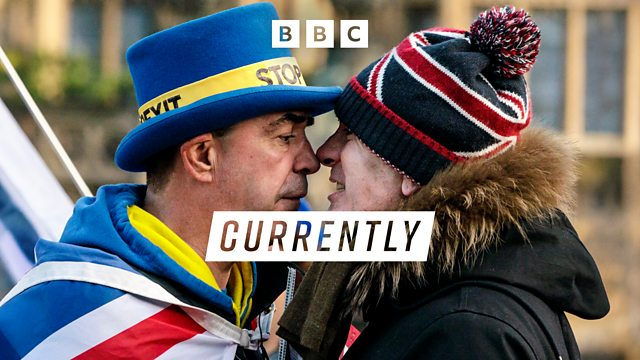
BBC Radio 4 recently broadcast a programme in the ‘Ten Years After Brexit’ series called ‘Tribal’. It was presented by James Tilley, c0-author of the book I discussed in my previous post, and with the same theme: the way that the Brexit referendum polarised the UK into two hostile ‘tribes’ around an issue which, up to that point, had not been high on most people’s agendas. I appear briefly in this programme talking about my book Two Tribes.

The programme, like Tilley’s book, doesn’t focus much on the demographic differences underlying those two camps (which I discussed in the previous post), but it is very good on the way that political tribes form and then consolidate themselves, as we bring our views into line with the views of our chosen ‘tribe’, and find ways of distancing ourselves from the rival tribe.

You can, at time of writing, listen to the programme here, if you have the BBC Sounds app:

Ten Years after Brexit: Tribal

Tribal Politics

Book cover Tribal Politics by Hobolt and Tilley
Cover of Tribal Politics: How Brexit Divided Britain By Sara B. Hobolt and James Tilley.

Full disclosure: this book was sent to me by the second author who described himself as a fan of my work, and it refers approvingly to my own fictional take on the same subject, Two Tribes. It also quotes (on p 71) from a scene in my book where a group of Remain voters at a dinner party, shortly after the Brexit vote, are, as my narrator put it, ‘trying to construct a shared narrative about what went wrong. But they were also, though they were not aware of it, constructing a new story about themselves and their relationship to the world.’

The phenomenon that Sara Hobolt and James Tilley explore here is the way in which the issue of EU membership, until relatively recently on the backburner of British politics, became a fault line so deep that much of the nation came to define itself as Leavers and Remainers – with many saying they would be reluctant to have a member of the other tribe as a lodger, or as a son- or daughter-in-law.

Unlike me, whose book relied on my own observations of these tribes consolidating among the people around me and in places like Twitter, these authors are political scientists who draw on the findings of many different surveys to show how these new identities emerged, and how they polarised large chunks of the population and reshaped British politics to the extent that the old two-party system now looks likely to collapse.

The authors show how peoples’ views hardened on both sides as they sought to be ‘good’ members of their chosen ingroup by demonstrating their loyalty to the emerging consensus within their ingroup, and exhibiting their hostility towards the outgroup. They demonstrate how well-known psychological processes came into play: cognitive dissonance and confirmation bias. (They don’t refer by name to groupthink, but describe it by implication). Members of each group, they show, were demonstrably (and in very similar ways) inclined to attribute negative personal attributes to members of the rival tribe, and positive attributes to their own. Up until the vote in 2016, when it was widely assumed by both sides that Remain was likely to win, Leave voters were more likely than Remain voters to express concerns about the fairness of the voting process and how it might be rigged in Remain’s favour. But after Leave won, it was Remain voters who began to argue that the process had been unfair. It’s fascinating stuff, and it’s not just hunches. The authors use a rich trove of statistical data to track these changes of attitude.

British voters have always been more sceptical of the EU than voters on the European mainland, the book notes, perhaps due to the fact that we live on an island, as well as to other factors like the strong cultural ties that connect us to the rest of the English-speaking world, but until the referendum, EU membership wasn’t close to being the number one political issue for most British people, and few of us would have used it to define ourselves politically. We were much more likely to define ourselves by party allegiance, and our two main political parties both contained both Leavers and Remainers. (They still do of course, but the Conservative party in particular has become much more of a bastion of Leavers than it used to be, while newer parties with a clear Leave or Remain standpoint, like Reform and the Greens, are becoming more prominent.)

What led this single political issue to become so suddenly the basis of these powerful new ‘tribal’ identities? Hobolt and Tilley identify three factors. First: issue contestation – the issue was made the subject of a referendum. Second: issue expression – ‘it not only created a clear dichotomous divide between the two sides but also forced individuals to commit to one side or the other with their vote’ (p 27) (What would have happened if multiple options had been offered, I wonder, including, for instance, leaving the EU but remaining in the customs union and single market, like Norway?) Thirdly: issue alignment – the issue cut across party lines, so ‘the divisions resulting from the referendum were not immediately subsumed into the existing party divide’ (p 27).

So, the authors assert, ‘while demographic characteristics, such as education and age, were weakly correlated with EU attitudes and referendum vote, it was the act of voting that created the Brexit identities. Remainers and Leavers were both children of the referendum’ (p 191).

Myself, I feel this point needs a little unpacking. The vote clearly did polarize people round those two positions, but I believe there are demographic factors in play which measures of class identity such as income or education level do not necessarily capture. I also think that the authors could have said more about the shifting of political tectonic plates (to use a good but rather well-worn metaphor) that has been going on around the world, and which the Brexit vote is fairly obviously a part of, namely a reaction against a perceived meritocratic elite and the socially liberal, secular, technocratic, internationalist values which it espouses. I think Michael Young predicted such a reaction in his 1958 book: The Rise of the Meritocracy (I haven’t read it, because I haven’t been able to find a reasonably priced copy, but I’ve read a lot about it: see my post here about a book that quotes it at length, and see this book also on liberal elitism). Also, if I may blow my own trumpet again, I myself have been anticipating a reaction of this kind, admittedly in rather lurid science fictional terms, since my first novel. (Or in not-so-lurid terms in the case of my novel America City which has in some ways been surpassed by reality in respect of luridness!)

So I would say that the vote did indeed polarise opinions and create two tribes, but my own hunch is that its effect was that of a catalyst, speeding up a process that would have happened anyway. I think Brexit brought to light pre-existing but previously unnamed social divisions, and pre-existing shifts in the relations between them.

Continue reading “Tribal Politics”

The Girl from Eden

I’m very pleased to say that I’ve just had a longish short story with this title accepted by Asimov’s SF magazine. I don’t yet know when it will appear in print, but I couldn’t have wished for a better home for it.

‘The Girl from Eden’ is a sequel to my Eden trilogy, or maybe postscript would be a better word. It’s about a young woman called Trueheart who is a character in the third book, Daughter of Eden. In fact, she’s one of the five women around whom that book revolves: Angie, Mary, Starlight, Gaia, Trueheart.

The story itself stands alone perfectly well, but even its premise would be a spoiler if you haven’t got round to reading the books. Myself, I’m not that bothered about spoilers, but if you don’t like them and want to read the books, you’d need to read all three of them before starting this story!

This story means a lot to me, for reasons which I only partly understand myself. A great deal of emotion went into it. More so than any other story I can think of.

Oh and it can also be read as a postscript to America City, and a kind of bridge between that book and the Eden books. But I won’t explain why.

css.php