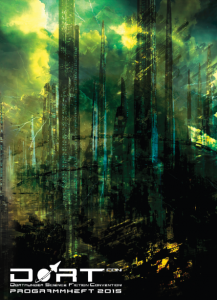
Published as my guest of honour contribution to the Dortcon convention programme, 2015. (Dortmund, Germany).
Blog, books, stories.
Published as my guest of honour contribution to the Dortcon convention programme, 2015. (Dortmund, Germany).
Published in In the Empty Places, edited by Iain Maloney (December, 2014)
Published in Solaris Rising 3, edited by Ian Whates. (August, 2014)
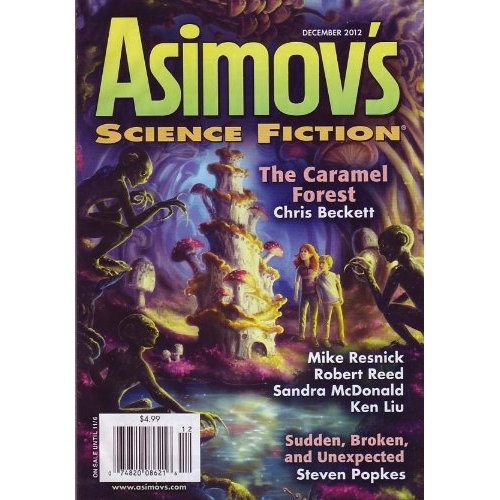
Published in Asimov’s, December, 2012.
(Collected in The Peacock Cloak from Newcon Press)
Published in Asimov’s, July 2011.
Humans have colonized Lutania, where Stephen works as a data analyst for the Agency. He’s an antisocial fellow who rudely avoids his co-workers and prefers the company of the simple settlers in their farming villages. His three-year gig on Lutania is nearing its end, when he’ll be transmitted back to Earth. This process necessarily involves the loss of all memories accumulated during the last 29 days before transmission. Agency rules prohibit employees from working after their Day 40, a stricture that Stephen resents and fears, for reasons he doesn’t quite articulate to himself. Or perhaps that he can’t remember. Stephen seems to have a secret from himself.
A character study of a person who lives on the fringes of normality, or perhaps further off. He has a strong aversion to the indigenes, who seem to be able to read minds; can they see the secret he keeps hidden from himself? There are some oddly idyllic scenes when he enjoys himself alone in the native Lutanian forests, but this is not where he chooses to take his enforced vacation. A very subtle horror story. I wish the premise were more credible.
Lois Tilton, Locus
Reprint:
(Collected in The Peacock Cloak from Newcon Press)
Published in Asimov’s, Jan 2011.
(Collected in The Peacock Cloak from Newcon Press)
Published in Postscripts anthology #22/23, ‘The Company He Keeps’, edited by Pete Crowther and Nick Gevers, 2010.
Jacob Stone is the nominal captain and sole crew member of an interstellar cargo ship that is so totally automated his job is mainly to sit alone and wait for emergencies that never happen. The job pays well because few people can tolerate the prolonged isolation, but Jacob is a misanthrope and a miser who lives only to accumulate wealth. On one stopover he encounters another solitary ship captain, a young man with a brighter future than his own. Jacob is jealous and brags about the passengers he is carrying in his cargo hold, a group of aliens on a religious pilgrimage who travel in a kind of “dry sleep” from which they are rehydrated at the end of the journey.
They were transparent too, and hard and fragile. But these were little people nearly half a metre tall, people that resembled human beings, with hands and feet and little faces. And they weren’t really empty shells either, even if they looked that way.
Jacob continues on his journey, but now he has become obsessed with the little aliens, helpless in their dehydrated stasis; he comes to hate them just because of the way the other man admired them.
The title refers to Jacob and the shriveled state of his heart, a man who cares for nothing but himself and not even himself very much. It is the banal and casual nature of his evil that makes this one effective horror.
Lois Tilton, Locus.
(Collected in The Peacock Cloak from Newcon Press)
Published in Conflicts anthology, edited by Ian Whates, Newcon Press 2010.
(Collected in The Peacock Cloak from Newcon Press)
Free audio version here, narrated by Scott Barclay.
Published in Asimov’s, June 2010.
Virtual reality. Fabbro created an idyllic world and copies of himself to live in it, but the copies eventually began to get ideas of their own, and ambitions. Finally, after rebellions and wars, Fabbro has entered the world he made and Tawus has come to confront him, to justify himself.
“I used to think about you looking in from outside,” he said. “When we had wars, when we were industrializing and getting people off the land, all of those difficult times. I used to imagine you judging me, clucking your tongue, shaking your head. But you try and bring progress to a world without any adverse consequences for anyone. You just try it.”
There is more here than virtual reality. Tawus embodies the contradictions between determinism and free will, between progress and stagnation. This is the retelling of a much older story of creation and rebellion. RECOMMENDED.
Lois Tilton, Locus
(Collected in The Peacock Cloak from Newcon Press)
Published in Postscripts anthology #19, ‘Enemy of the Good’, edited by Peter Crowther and Nick Gevers, 2009.
(Collected in The Peacock Cloak from Newcon Press)
