Blog

Crash

The most serious car crash I have ever been in happened nearly thirty years ago.  We were driving from out of town towards the Elizabeth Way Bridge in Cambridge, returning from a trip to the sea, and my wife was just stopping for a red light at a pedestrian crossing, when a young man coming in the other direction at about 70MPH lost control of his scooter as he came down the bridge, veering wildly across the road to smash right into the front of our car.  The engine compartment was crumpled like a carboard box and the scooter lay in pieces on the road.  We were showered with fragments of our own windscreen.  There was a stink of smoke and hot oil.

I wasn’t sure what to do, but having established that none of us were hurt beyond a few small scratches, I climbed out of the car.  The scooter rider had somersaulted right over the roof of the car and was sprawled on his back on the road behind us.   He was unconscious.  His skin was grey with shock.  The only sign that he was alive was a pop-pop-pop of his breath coming out through his lips.  I had no idea what to do for him, and was in no state to think clearly about anything at all.  (Later it made me think about soldiers in wars, facing traumatic events, one after another, for hours on end: Tom Hanks in that amazing scene in Saving Private Ryan, standing in the middle of  the Normandy landings in a kind of disconnected fog.)  Other people took charge of him.  An ambulance came.  He died in hospital that same night.

People came out of houses and from the cars that had stopped behind us to attend to the injured man. Someone invited my family into their house and made drinks for our frightened kids: my oldest daughter aged three managing her fear by announcing things very loudly and firmly to everyone present.  Someone else came out with a fire extinguisher and sprayed it over our crushed engine. The whole thing -our adrenalin-flooded bloodstreams, the nearness of death, us being the centre of attention, the sudden emergence of a kind of temporary community from behind the closed doors of houses and cars- had an eerie, unreal feeling.

The next few days were strange.  A police officer came round and so did the parents of the dead man who the police had put in touch with us. He’d been their only child, and had just left their house after a meal when he had the crash.  (He’d been through a difficult time, they told us, but they’d been hoping that he’d begun to turn a corner in his life.  They had barely begun to process what had happened.)   And we experienced something that I wouldn’t have anticipated or thought possible: every few minutes for the next couple of days, the crash replayed itself in my head.   I almost literally heard and felt the moment of impact, over and over again.  My whole head ached with it.

Going back to the immediate aftermath of the crash itself, one thing I remember, because I made a particular point of remembering it, is me telling my future self, ‘Looking back on this, with all the strangeness, all the heightened physical arousal, all the drama, it may seem to have a kind of glamour, like the glamour that people imagine that war has.  But I’m telling you now, it is not glamorous, not in any way.’

* * *

I’ve just read Ballard’s Crash, which of course is all about the glamour of car crashes.  Although I’ve read a lot of his work (I’ve written about some of it here, here and here), I’ve avoided this book up to now, unable to face its perversity.   But I’ve finally read it, 44 years after it came out.

By all the rules Crash ought to be completely unreadable not only because of its subject matter -the whole book is about a sexual obsession with car crashes- but also because, in common with other books of Ballard’s, it lacks the progression, the unfolding, that you expect in a novel.  The third paragraph is already talking about ‘windshield glass frosting around her face like a death-born Aphrodite…  her uterus pierced by the heraldic beak of the manufacturer’s medallion, his semen emptying across the luminscent dials that registered for ever the last temperature and fuel levels of the engine’.   The narrator (a character teasingly named Ballard) is hooked on this stuff pretty much from the off, and the rest of the book is filled with scenes and language of this kind, which get neither more nor less extreme.  In place of progression, the book remorsely repeats, over and over, the same basic ideas.  Again and again we are presented with mixtures of some combination of blood, semen and mucus with engine oil or coolant.  Again and again the image recurs of parts of the dashboard imprinted on the human body.  Again and again the characters obsess about matching the angles of the human body (intact or mangled) and the angles of sex, with the angles of a car in its smashed or pre-smashed form.

And yet it is readable. It is actually a lot more readable than many more conventional novels I’ve read or attempted to read recently, and I’m trying to work out why.

For one thng, as I’ve noticed before, Ballard’s books work like paintings.  Words have necessarily to be read one at a time, but the time element is much less important in Ballard than is conventionally the case with novels.  What emerges is not so much a story as a picture, very detailed and intricate, which all that repetition, like repeated brush strokes, serves to consolidate in the mind.

Ballard’s writing is also emotionally very cool.  Characters are never appalled, or terrified, or horrified, or grief-stricken.  At most they are ‘uneasy’ or ‘unsettled’.  And they are viewed with a cool eye too.  There’s no authorial judgement on them.  These people are driven by a bizarre sexual obsession but the way it is presented doesn’t really invite a sexual response or even a response of disgust or revulsion, in spite of the extremely graphic details involving ‘faecal matter’, ‘anal mucus’, ‘vaginal fluid’ etc etc  You could say the presentation is clinical, but it also makes me think of the psychological phenomenon called dissociation, an emotional detachment from reality.   In psychology, dissociation is typically a defensive response to a reality too terrible to process (again, I think of Hanks’s character standing dazed on that beach in Normandy), and in a book like this it serves the same kind of function for the reader, making it possible to continue through material which otherwise might drive one to fling the book away.  Only later, as I gradually processed what I’d read, did I see that I’ve been presented with a vision of modern consumer society as pornography, as artifical images that are simultaneously hyper-seductive and completely dehumanised.

The other thing that keeps you reading is simply the intensity of the vision:

We had entered an immense traffic jam. From the junction of the motorway and Western Avenue to the ascent ramp of the flyover the traffic lanes were packed with vehicles, windshields leaching out the molten colours of the sun setting above the western suburbs of London. Brake-lights flared in the evening air, glowing in the huge pool of cellulosed bodies. Vaughan sat with one arm out of the passenger window. He slapped the door impatiently, pounding the panel with his fist. To our right the high wall of a double-decker airline coach formed a cliff of faces. The passengers at the windows resembled rows of the dead looking down at us from the galleries of a columbarium. The enormous energy of the twentieth century, enough to drive the planet into a new orbit around a happier star, was being expended to maintain this immense motionless pause.

* * *

It was planes rather than cars that did it for me as a child, and specifically war planes.  It was that same glamour, that same intoxicating mixture of speed and modernity and death.

I remember when I pretty small, maybe 6 or 7, I developed for a while a fear that a plane would crash into our house.  I never told anyone about it, but it haunted me continuously, day after day.  But even then I didn’t stop playing with planes.  I can even remember noticing the contradiction once while playing on my own, noticing that I was living in fear of planes, even while I fantasised about being a fighter pilot.  I had compartmentalised my mind so effectively that planes could simultaneously be objects of desire and objects of dread.

This makes me think of Ballard’s childhood experiences in Shanghai, described in fictionalised form in Empire of the Sun.  Surrounded by horrors, completely in the power of enemies, he learns to admire and be excited by the things that most threaten him.  I guess this was where he learnt to separate emotions from phenomena in that way, so fundamental to his writing voice, that allows him to explore territory where almost no one else would go.

Angie Redlantern speaks

Daughter of Eden is now out as an audiobook from Audible.   It’s read by Imogen Church and, listening to the sample, I think she’s done a really wonderful job of it.  I felt I was listening to Angie Redlantern herself telling the story.  Which was a strange and rather moving experience, given that Angie (possibly my favourite Eden character) came out of my own head.  Click on this link for the free sample and judge for yourself.

Modernity isn’t what it used to be

I was thinking (vaguely) about  J G Ballard and his seductive apocalypses: empty swimming pools, crashed Zero fighters, abandoned atomic test sites, Sputnik-era satellites, disintegrating artistic communities in decaying Californian villas.  And it struck me that modernity itself was seductive in the mid-twentieth century. Deadly, perhaps, doomed, toxic, even unspeakable, but nevertheless very sexy.

And it struck me then that modernity is no longer sexy.  There’s nothing sexy about these tablets and phones we fiddle with so obsessively.  They’re desireable, no doubt, but not in a dangerous or sensual or edgy way.  Their appeal is to the anal desire for neatness and tidiness, the kind of gratification that, according to Freud, begins with the pride taken by our infant selves on seeing our little toddler turds safely deposited in the potty.

Ballard said, apropos of Crash, ‘I think the key image of the 20th century is the man in the motor car. It sums up everything: the elements of speed, drama, aggression, the junction of advertising and consumer goods with the technological landscape.’  He wasn’t saying this was a healthy situation, but there’s no denying its glamour.

It struck me that the equivalent image for our current era would a person immersed in rearranging the icons in their smartphones.

* * *

A slightly different thought that also came to me was that, in spite of much trumpeting about the breakneck pace of change these days -the way the world has been turned upside down by the internet, vastly greater computing power and so on- in fact my own experience (I was born in 1955) has been that the pace of change over the period of my life has actually been much slower than in my parents’ generation.   The attitudes and mores of the current generation of young adults are much more similar to those of the generation (mine) that reached adulthood forty years ago in the 1970s, than were the attitudes and mores of the 70s generation to those of the generation forty years before them, which reached adulthood in the 1930s.  The idea of the ‘generation gap’ was current in the 1970s, for instance, but we have no equivalent term now.

Think of generally accepted attitudes to race, social class, sexuality or marriage in the 1930s, the 1970s and the 201os, and surely it’s obvious that the 1930s are the outlier, meaning that the pace of change has slowed.  (In fact, in some respects, the 2010s show signs of things moving back towards older forms.  My children’s generation have much more conservative ideas about marriage, for instance, than were the norm in their social class in the 1970s.)

Or think of popular music.   Who could deny that the music of the 2010s is much more similar to that of the 1970s, than the latter was to the music of the 1930s?   In fact music from the 1960s and 70s remains well-known and liked by the current generation of young adults, and the music of the 201os is still played within a similar framework (look at all the bands at Glastonbury which still use the electric guitar/bass/keyboards/drum format that was typical of 60s and 70s bands).  But in the 1970s we knew virtually nothing at all about the music of the 1930s.

So it looks to me as if computers and the internet may have been slightly less earth-shaking, culturally speaking, than we often imagine.  Perhaps in the long-run, they will been seen to have been much less instrumental in changing social attitudes than mid-twentieth century innovations like television, cheap air-flight and (the biggest of all in my opinion), reliable contraception.

All of which could explain why present day modernity seems so much less sexy than the modernity of forty years ago.  If cultural change is indeed slowing down rather than speeding up, then one would expect the new to seem less shocking and exciting than was case back then.  We have many new conveniences, it’s true, but convenience and glamour are very different things.

*  *  *

This isn’t good news for science fiction writers, I’m afraid, and perhaps explains why the genre no longer has the prestige it had in the days when Ballard started out.

Moonshots once seemed like the beginning of the future, but now are receding into the past.  And, however hard we try, ever more sophisticated devices for organising information just do not have the same allure.

Problematic (Words I don’t like #1)

A Canadian student group apologises for including he Lou Reed song Walk on the Wild Side in a playlist, on the basis that the lyrics of the song are transphobic and therefore ‘problematic’.   Transphobia seems a pretty weird charge to lay against this particular song -a song which actually celebrates a transexual character in its opening verse- but let’s leave that aside.  What I find actually creepiest about this story is the use of the word ‘problematic’.

To be clear about this, I don’t mind people strongly objecting to what other people say.  ‘I find X’s views utterly obnoxious’, is fine.  So is ‘X’s views are racist” (and indeed so is ‘ X’s views are transphobic’, whether or not it happens to be a reasonable charge in this particular case).   But ‘X’s views are problematic’, which in a way sounds more polite, less confrontational, I find quite nauseating.

I’m trying to figure out why.   I think in part it’s the very politeness that I object to, the tight, anal, priggish, self-control that is implied. But I think perhaps also it’s the implication that there exists a single correct account of the world, which the speaker possesses and others do not.

Tweet tweet

When I joined Twitter originally, I it was because my daughter had persuaded me that it would be good way to promote my books, let people know about new posts here etc. ‘Well,’ I told myself (like some gullible kid accepting a free sample of heroin), ‘what harm could it do just to try?’ I am now addicted. I must spend many hours each week looking at it, and use it as my primary source of news.  Yet –and I guess this is probably true of all the best addictions– a large part of me really loathes it.

When I say I loathe it, I’m not talking here about the really nasty things, the trolling, the rape threats, the racism, the routine anti-semitism.  Those are vile of course, but I tend to hear about them at second hand.  I am talking more about things I see every day.

So, for instance, I attempt to have a debate with someone who disagrees with me, and instead of engaging, they project onto me some stereotype they have of people who disagree with them, and shout angrily at this imaginary being. (Summary: Dissident dissents.  Dissident labelled.   Comforting straw man used as punchbag.)

Or.  I come across a conversation between people I more or less agree with.  An outsider joins in who takes a different view.  The outsider is headed off.  ‘That shut him up!’ someone observes.  ‘Not so much “him” as “it”’ says another.  They all duly ‘like’ this response. (Intruder dismissed.  Intruder dehumanised.   Echo chamber restored to full working order.)

And then there are the great feeding frenzies of indignation.  Someone outside your own circle says something that you disapprove of: Exhibit A.  You share Exhibit A with your followers, held at arm’s length with tongs. Howls of outrage ensure, continuing agreeably over many hours, becoming increasingly ad hominem all the whileNot only is Exhibit A despicable, but the person who said it is physically repulsive, sexually perverted etc etc. (Offender identified.  Offender pilloried.  Cosy sense of community achieved.)

But I suppose this isn’t really Twitter I’m talking about.  It’s the human race. Twitter just makes these things more visible.   Irving Janis described all this back in the seventies when he characterised ‘groupthink’ as including the following:

  • Unquestioned belief in the morality of the group…
  • Stereotyping those who are opposed to the group as weak, evil, biased, spiteful, impotent, or stupid
  • Direct pressure to conform placed on any member who questions the group, couched in terms of “disloyalty”
  • Mindguards— self-appointed members who shield the group from dissenting information

I find myself increasingly thinking about the role of biology in this.  It seems to me that many behaviours which we think of as typically human are simply part of our animal nature.  Creatures right across the animal kingdom –not just mammals, but birds, fish, insects, crustaceans…– engage in elaborate and time-consuming behaviours intended to protect their territory and see off intruders.  It’s one of the main functions of birdsong, for instance.

And, after all, that’s what Twitter is named after.

My Next Novel

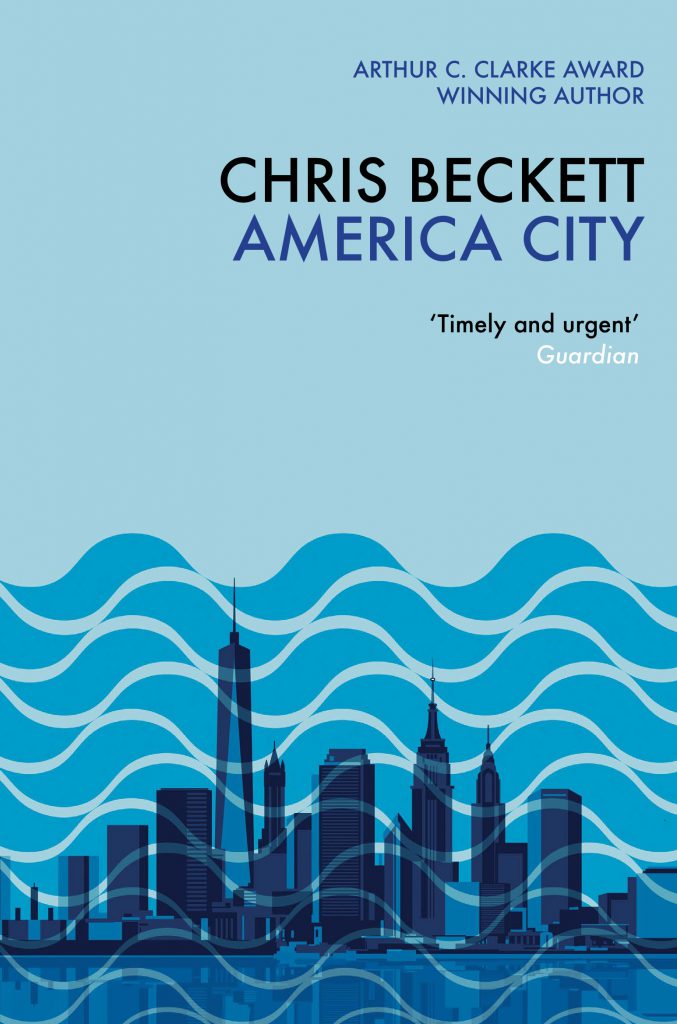
My next novel, America City, is now at the proof-reading stage.  It even has an Amazon page already. I’m getting rather excited about it.  It’s starting to feel real.

This book will be a new departure for me in that all three of its predecessors were set on my sunless planet, Eden, but this takes place in North America in the twenty-second century.  No more glowing forests or hmmmphing trees, though I think readers may still be able to spot links of various kinds between America City and the Eden books.

Like my previous novels it’s to be published in the UK by Corvus, and should be available from 2nd November.

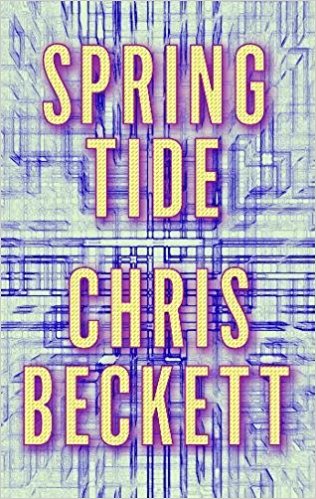
And there’s another book behind it too, my next short-story collection, Spring Tide, already good to go, and also to be published by Corvus.  (It also has an Amazon page).  It should be coming out in the UK in the Spring of 2018.  This is a new departure too.  I have published two previous collections, and one of them won me a prize, but this is my first collection to consist entirely of previously unpublished stories, and my first ever published fiction, whether in the long or short form, that really could not be defined as science fiction.

Spring Tide

‘A brilliantly different take on what it means to be alive in the 21st century’  Eric Brown, The Guardian (full review here)

Twenty-one original stories.

My first published foray outside of the parameters of science fiction. Some of the 21 stories in this book include fantastical elements, some do not, but none of them (at least according to my definition) could be described as SF.

Spring Tide on Hive

Spring Tide on Amazon UK.

Spring  Tide audio book  (Accompanied by the worst review any book of mine has ever received!)

America City

“An uneasy read that manages to feel both timely and urgent…”  Liz Jensen, The Guardian.

The United States a century in the future.   As a result of climate change, powerful hurricanes hit the east coast every year, each time a little further north.  And large areas of the southern half of the US have insufficient water, meaning that many towns and cities, and whole swathes of farmland, are no longer viable.  Each year a steady stream of refugees from southern states heads north, but they meet an increasingly frosty welcome, and some northern states are threatening frontier controls to keep them out.

Holly Peacock, a bright young British PR professional who has settled in the US, begins to work for a charismatic US Senator called Stephen Slaymaker, who rose from poverty via army service in Africa, to build up one of America’s largest trucking businesses.  Slaymaker is campaigning for a huge government-funded programme to shift the American population northwards, and so prevent the north-south divide from tearing America apart.    When Slaymaker stands for President, this Reconfigure America programme is at the core of his platform and Holly’s job is to win support for it.

But how to sell the idea to northern voters that they should welcome in millions of refugees from the south, and pay for it too in their taxes?  Working closely with Slaymaker, Holly finds a way, but it involves fighting dirty and has catastrophic consequences which she didn’t anticipate at all.

America City on Amazon UK.

Writing America City, some background.

To Become a Warrior 2017

I first wrote ‘To Become a Warrior’ in 2002.  It was published in Interzone, and subequently in one of Gardner Dozois’s Year’s Best anthologies.  It’s about Carl, a poorly educated, not particularly bright young man who’s been left outside of the prosperous, liberal society of which he is nominally a citizen, and his recruitment by a murderous gang of ‘shifters’ who want to take the world back to the world of the Vikings.

It was one of a number of stories set in this world, the first being ‘The Welfare Man’ written in 1993.   Judging by reprints in anthologies and reader’s polls, they have been among my most popular stories.  However, I didn’t include them in either of my story collections, choosing instead to incorporate them into my second novel, Marcher.

My work as a social worker – when I wrote the story I was only a couple of years on from working as the manager of a social work team- had given me a powerful sense that even a prosperous, economically booming, middle class town like Cambridge (where I lived then and still live now), has another side to it, people who share no part of the prosperity.  There was the famous Cambridge, with its beautiful old buildings, its ancient University, its IT and biotech industries, its bright, educated, liberal-minded citizens, and there was this alternate Cambridge which no one comes to visit, where I would go as part of my job.

When I incorporated ‘To Become a Warrior’ into the novel Marcher, I shifted from first to third person, added and changed details to make it fit in with the rest of the book, swapped around some characters, and gave the story two additional endings, in keeping with the novel’s theme of branching time lines and alternate presents.  Below, I have restored the original first person short story, except that  this time I have opted for one of the other endings.

I’m putting it out here now to mark the inauguration of Donald Trump.   A clamour of rage and fear is going up today from the members of, so to speak, my own tribe, the liberal middle class.  We see everything we value under threat, and we look around for people to blame.  But I have a strong sense, which I’ve tried rather clumsily to explore in previous posts (for instance this), that we ourselves must take a share of that blame. If you leave people outside, they turn to others who offer to take them in.

Anyway, here it is in full, ‘To Become a Warrior ‘ to mark this historic day:

Continue reading “To Become a Warrior 2017”

The smartsplaining voice

There’s a lot of talk these days about a growing contempt in the world for evidence, for experts, for reason itself.  It’s a real concern. Not much hope for the future if decades of meticulous scientific work on climate change can all be tossed aside by know-nothing ‘common sense’.  Not much hope for a decent society if obvious lies can be uncritically accepted as true, while facts are dismissed out of hand

But another kind of ugliness that’s been coming to the fore lately is the voice that says, in effect, we smart people know best, and those thick people should just shut up and wait to be told what’s good for them.  Weary, angry, contemptuous: the smartsplaining voice, it might be called.

Clever educated people who are good at reasoning, should be careful not to assume that this alone makes them right.

I remember once in my social work days, visiting a barely literate client and her saying to me resentfully at the end: ‘I suppose you’re going to go away and write this all down, aren’t you?’  However reasonable I was, however conscientious, the fact remained that my interpretation of events was going to go on the record, and hers was not.

A few years later, after a change of job, I acquired a reading ticket for the Cambridge University Library, and had the habit for a while of sitting in the cafe over there to write.  As I half-listened to the people at the tables around me, academics and students coming and going with their cups of coffee and tea, I noticed that I could go all day without even once hearing a regional accent of any kind, only the distinctive drawl of the British private school system.

There’s no question in my mind that every one of those people in the library would have been much better at rational argument and far better-informed than that former client of mine in her council house three miles away.  But every one of their arguments, however beautifully constructed, would necessarily be based on their own experience and what they’d read, and I’ll bet that neither their experience nor their reading equipped them to know anything about that woman’s world.  (This is true of me too, incidentally, although my former job afforded me small glimpses into it.)

So when some of them become politicians, or economists, or entrepreneurs, their judgements about the world, however carefully reasoned, will take almost no account at all of what that woman feels, what’s important to her, how she imbues her life with meaning.  Their judgements will, on the other hand, be very amply informed by the needs of people like themselves, what’s important to them, what imbues their life with meaning.

And that makes me think that what may look like a revolt against reason itself, may be in fact be a revolt against a class that is very good at reasoning, and very good at explaining why the world ought to be run in a way that suits that very same class.   Not revolt against reason as such, in other words, but revolt against reasoning that (however unintentionally) is rigged in favour of the reasoners.   After all, if you’re good at reasoning, you’re good at rationalising too.

Which is why I think that members of that class, including me, would do better to think about what we’ve been excluding from our view of the world, than to dismiss whole groups of people as ignorant thugs.

css.php